Barrington, Cumberland, East Greenwich, Woonsocket.
We cross the state line regularly, and Barrington is the reason: it sits nine miles from our Dighton shop, closer than several of our Massachusetts towns and closer than Taunton. From there we work down the bay to East Greenwich and up the Blackstone Valley to Cumberland and Woonsocket.
Rhode Island has its own fertilizer regulations and its own soils, and both differ from what we deal with a few miles east. That is worth knowing rather than glossing over, because a crew that treats a Barrington lawn like a Swansea lawn will get the timing wrong.
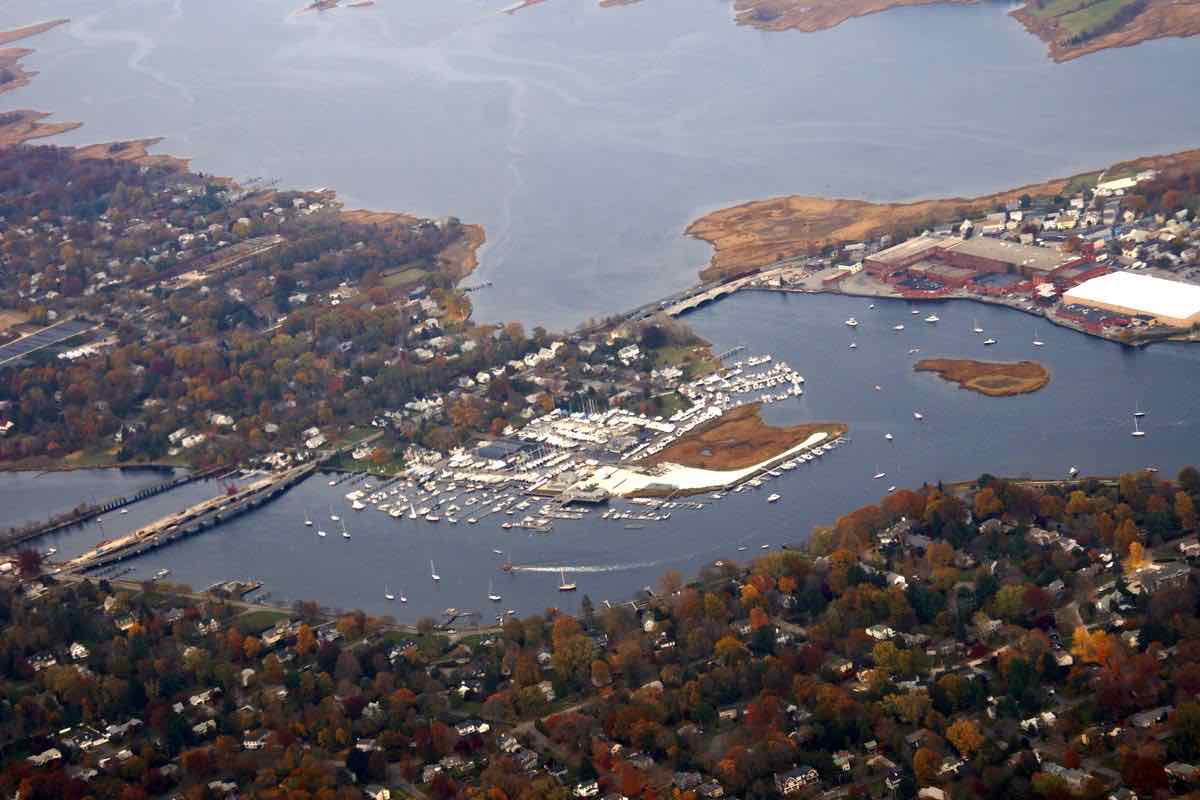
Barrington has some of the better soil in our whole service area — sandy loam with real structure, along the Barrington and Palmer rivers. What it also has is Narragansett Bay, which means the water-facing and road-facing margins take salt every winter. The lawn body responds beautifully to a straightforward program; the salt-exposed edges need tolerant fescues rather than more fertilizer. Treating those as two problems is the whole trick here.
Up the valley the ground changes completely: stony glacial till with clay content, holding water, staying cold late, and compacting hard under traffic. Lawns on this soil are almost never short of nutrition — they are short of air at the root zone. Core aeration is the first move and frequently the only one that matters in year one. Feeding a compacted till lawn harder is the most common wasted money we see north of the line.
Down toward Greenwich Cove the pattern is established properties with substantial tree cover and some water exposure. Dense shade thins turf, owners add nitrogen, and the shaded grass goes leggy and disease-prone in a humid July. The answer is species and height rather than product: fine fescues in the shade, mow at the top of the range, and overseed in fall instead of fighting the site all summer.
Rhode Island regulates lawn fertilizer separately from Massachusetts, including restrictions on phosphorus and on application timing near water. We work to whichever state you are actually in rather than applying one calendar across the line — which in practice means phosphorus only where a soil test justifies it, slow-release nitrogen, and no application ahead of heavy rain on bay-side or riverside properties.
Grub pressure follows the same July egg-lay here as in Massachusetts, and prevention in late spring is the cheap version of the problem. On salt, the damage happens in winter but only shows in April, when exposed margins come out of dormancy visibly worse than the sheltered middle of the lawn. That is the moment to water deeply, assess the margin, and plan a fall overseed toward tolerant fescues on those specific edges.
Where we work in Rhode Island:
Eric knows what he’s doing! We know our lawn is in good hands for its health and curb appeal. He is professional and trust worthy. Give him a call!
Excellent service! Our lawn is so healthy and green! Would highly recommend!
My lawn went from patchy and thin to thick and green. PROTURF knew exactly what it needed.
Get an instant lawn care price or contact us directly. Honest, owner-operated turf care for Rhode Island homeowners.
Serving Southern Massachusetts and nearby Rhode Island — Bristol and Plymouth counties, the South Coast, the South Shore and east to the Cape Cod Canal with a higher level of service. Let’s get your soil healthy today.