Duxbury and Scituate to the Bridgewaters.
The South Shore covers a lot of different lawns. Duxbury and Scituate take salt off the water; Kingston, Pembroke and Carver sit on sandy Plymouth-series ground inland of it; Rockland, Whitman, Hanson and East Bridgewater are older suburban lawns on heavier soil entirely.
Plymouth and Bridgewater are big enough to have their own pages, and they do. This page is for everywhere else on the South Shore — and the honest short version is that on this coast, what grass you plant matters more than what you feed it.
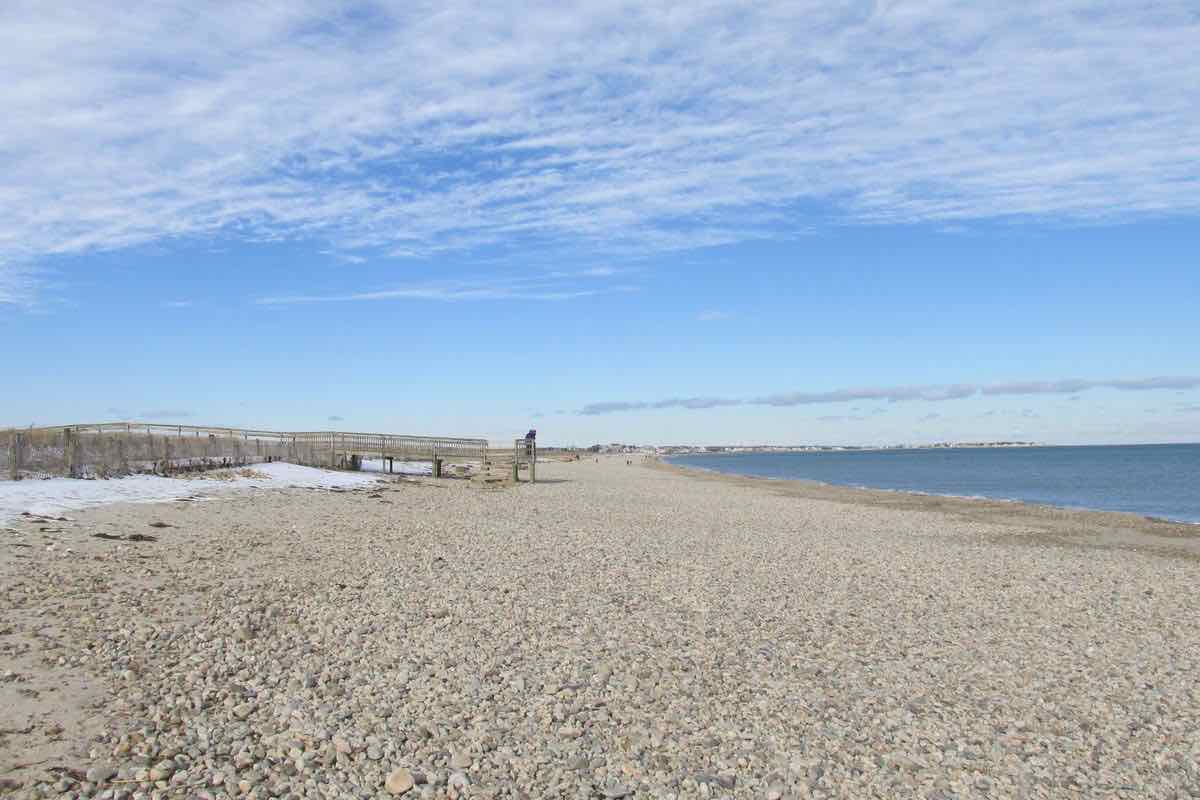
From Snug Harbor and Island Creek to Minot, Greenbush and the Humarock shore, front lawns within reach of the water take salt on every winter storm. Salt burns turf directly and strips potassium and magnesium from the root zone. Kentucky bluegrass has no answer for it; salt-tolerant tall and fine fescues do. Coastal renovation here is a species decision first and a fertilizer decision second, and a deliberate deep watering in spring helps carry accumulated salt below the roots.
Kingston, Pembroke, Carver and Plympton sit on the same droughty outwash sand that gives Plymouth its name — it drains within hours, holds almost no nutrient charge, and tests acidic before anyone limes. Unfed lawns on this ground reliably brown out in early July. Slow-release feeding, lime to test, and root depth built in spring are what change that; watering harder on shallow roots is renting green by the week.
Rockland, Whitman, Hanson and East Bridgewater are a different job again: postwar and 1970s–80s neighbourhoods on heavier soil, under trees that are now sixty years old, running grass varieties that were standard when the lawn went in. Compaction and tired genetics are the limiting factors, not nutrition. Core aeration and a fall overseed with modern disease-resistant varieties is the highest-return work available on these lawns.
The sandy full-sun yards inland of the coast are strong Japanese beetle egg-laying ground in July, and September damage that peels back like carpet is the result. Prevention belongs in late spring, ahead of the hatch. Where lawn meets scrub and pine — and there is a great deal of that edge out toward Carver and Plympton — tick pressure is real from May into October: mow high, hold a crisp mown boundary, and keep needle and leaf litter from banking along it.
Most South Shore water departments post seasonal outdoor restrictions, and Duxbury and Scituate in particular tighten up in dry summers. Deep-and-infrequent inside whatever your town currently allows is what works: about an inch a week including rain, in two early-morning cycles. The lawns that come through a restriction summer intact are the ones whose roots were built in April and May, not the ones watered hardest in August.
Towns we cover from this page. Plymouth and Bridgewater have their own:
They do a fantastic job. They fertilize my lawn 5 times per season. The plant new seed when needed. They address any concerns promptly. My lawn is green, lush and weed free. I have been using Erik for about 5 or more years now. I couldn't be happier.
Eric knows what he’s doing! We know our lawn is in good hands for its health and curb appeal. He is professional and trust worthy. Give him a call!
Excellent service! Our lawn is so healthy and green! Would highly recommend!
Get an instant lawn care price or contact us directly. Honest, owner-operated turf care for South Shore homeowners.
Serving Southern Massachusetts and nearby Rhode Island — Bristol and Plymouth counties, the South Coast, the South Shore and east to the Cape Cod Canal with a higher level of service. Let’s get your soil healthy today.